✓
What it is
A screenless consumer health wearable designed to collect daily and overnight biomarker data and organize it into wellness, sleep, recovery and long-term trend insights inside the Hume Health app.
A balanced look at the screenless health wearable, including its tracking features, app experience, battery life, practical limitations, and the type of user it may suit best.
You will be redirected to the product website to view current details and availability.
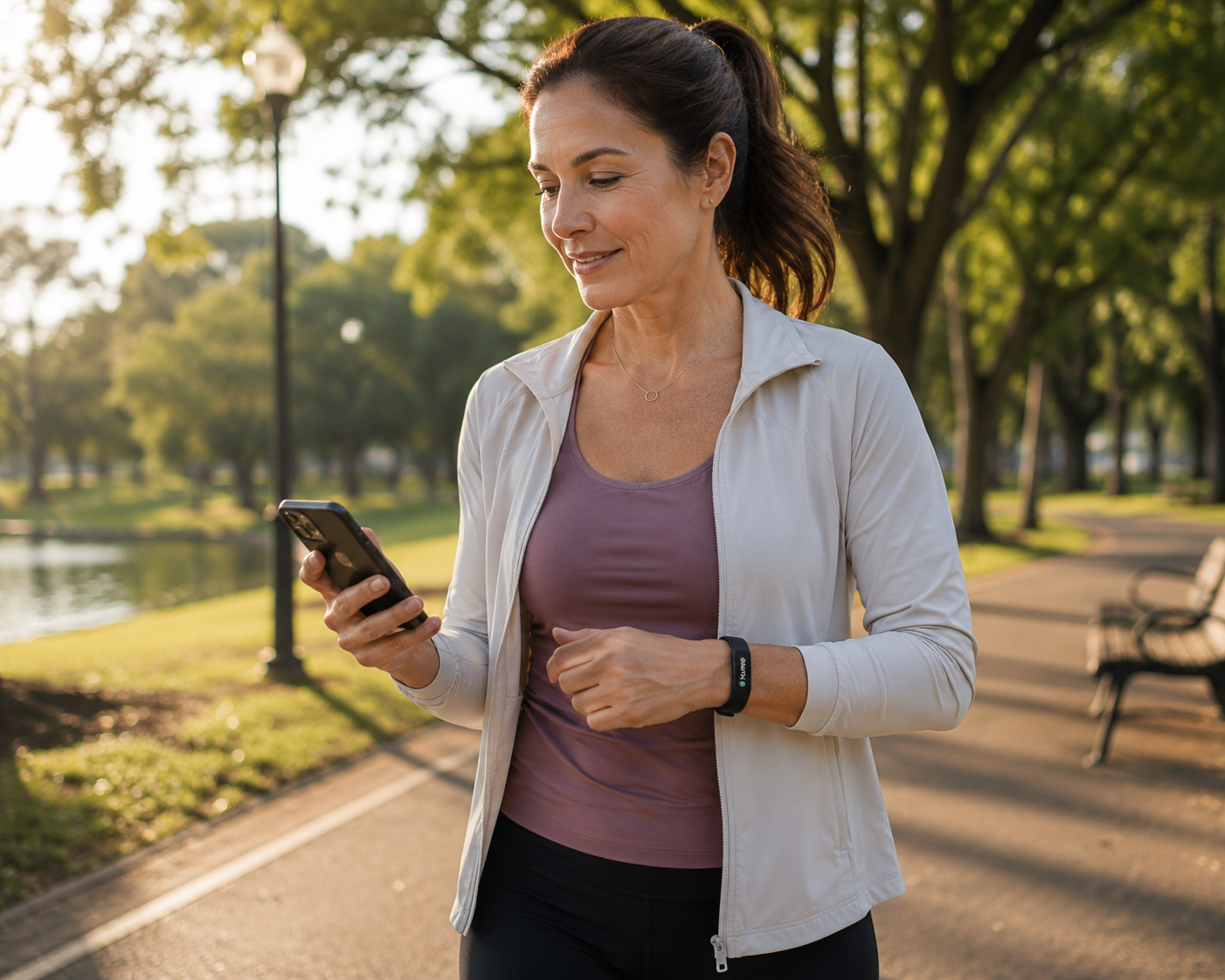
Long battery life, screen-free comfort, broad health-trend tracking and access to core app data without a mandatory subscription.
It is a consumer wellness wearable, not a medical device. Some insights are proprietary interpretations rather than clinical measurements.
People interested in sleep, recovery, daily health patterns and long-term wellness trends rather than smartwatch notifications or advanced sports navigation.
We are not assigning a numerical score because no independent test data was supplied for this page. Instead, the assessment below separates verifiable product characteristics from the areas where users should keep expectations realistic.
A screenless format can be less distracting and easier to wear overnight than a full smartwatch.
The manufacturer states up to 14 days per charge, with actual runtime depending on syncing and usage.
The band tracks multiple signals, including heart rate, HRV, blood oxygen, sleep, skin temperature, activity and recovery-related data.
The free app provides core metrics; optional premium features add deeper AI-based coaching.
It should be used for wellness trends, not diagnosis, treatment decisions, messages, apps or advanced GPS functions.
A screenless consumer health wearable designed to collect daily and overnight biomarker data and organize it into wellness, sleep, recovery and long-term trend insights inside the Hume Health app.
It is not a smartwatch, a clinical blood-pressure cuff, a diagnostic device, a medical monitor or a replacement for professional healthcare.
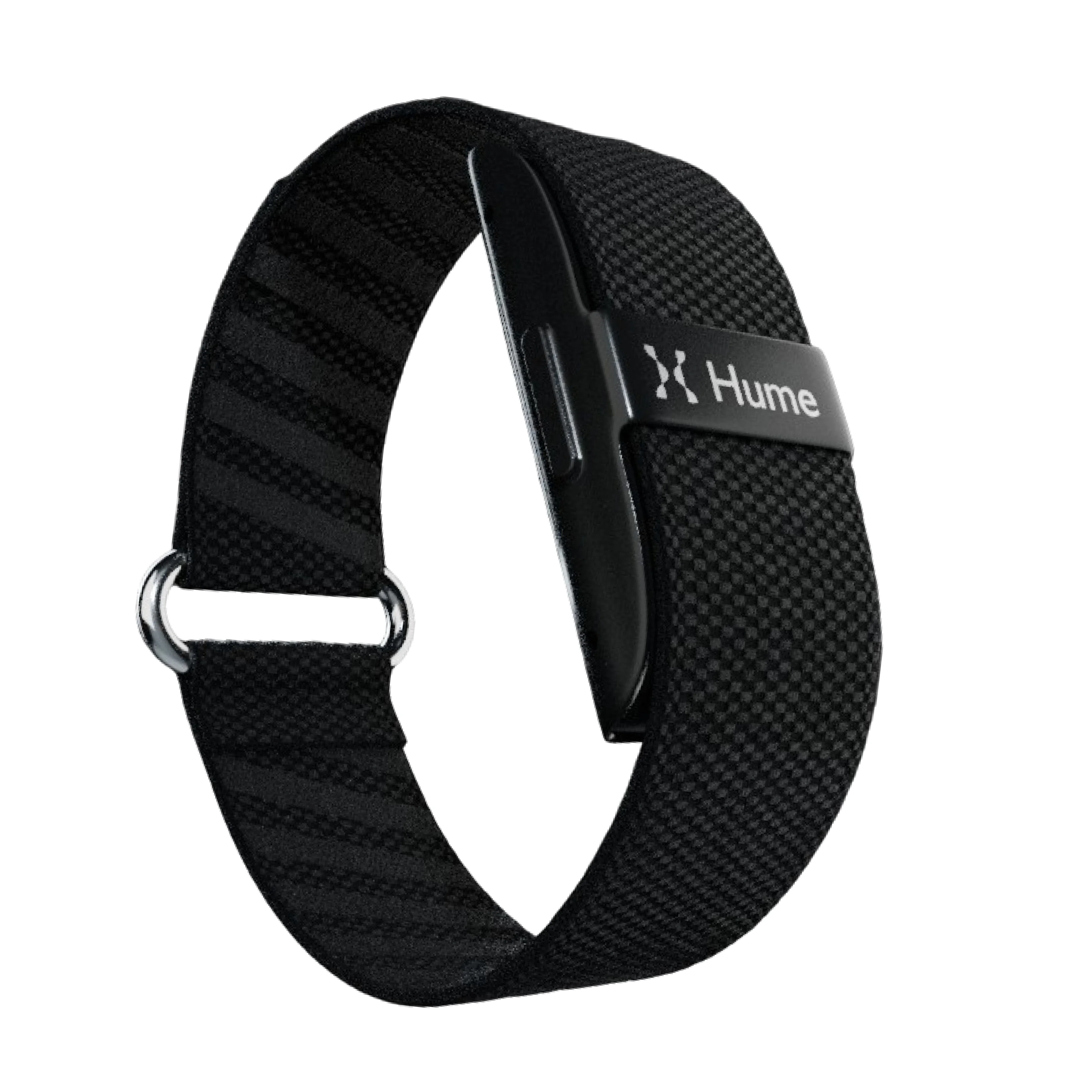
A useful review should connect specifications to practical value. These are the main product characteristics supported by the manufacturer materials supplied for this project.
Less frequent charging can reduce gaps in sleep and recovery data. Battery life may vary with syncing frequency and continuous use.
The product uses five LEDs and four photodiodes to capture signals used for heart rate, HRV, SpO₂ and related wellness metrics.
A lightweight, breathable strap and IP68 water resistance are intended to support daytime, exercise and overnight use.
Core metrics are available in the Hume Health app without a required subscription. Optional premium access adds AI-powered coaching and deeper analysis.
The current product page describes blood-pressure trend monitoring. These insights should be treated as directional wellness information, not clinical readings.
Hume uses proprietary scores such as Metabolic Capacity and Metabolic Momentum to organize multiple signals into a simplified view of recovery and long-term patterns.
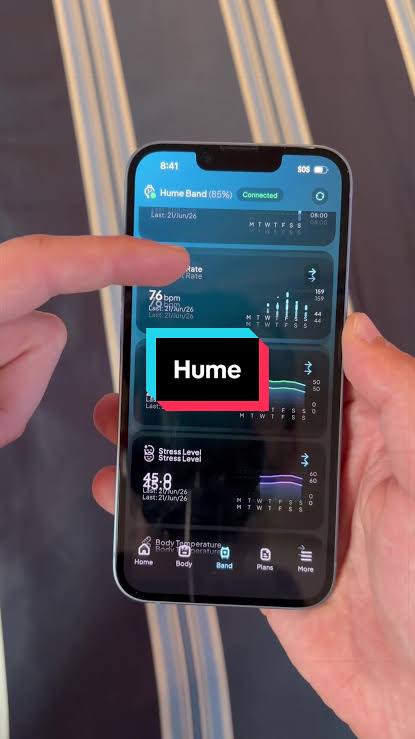
The band itself has no screen, so the Hume Health app is the center of the experience. It organizes raw measurements into dashboards for areas such as sleep, heart rate, HRV, blood oxygen, recovery and other wellness trends.
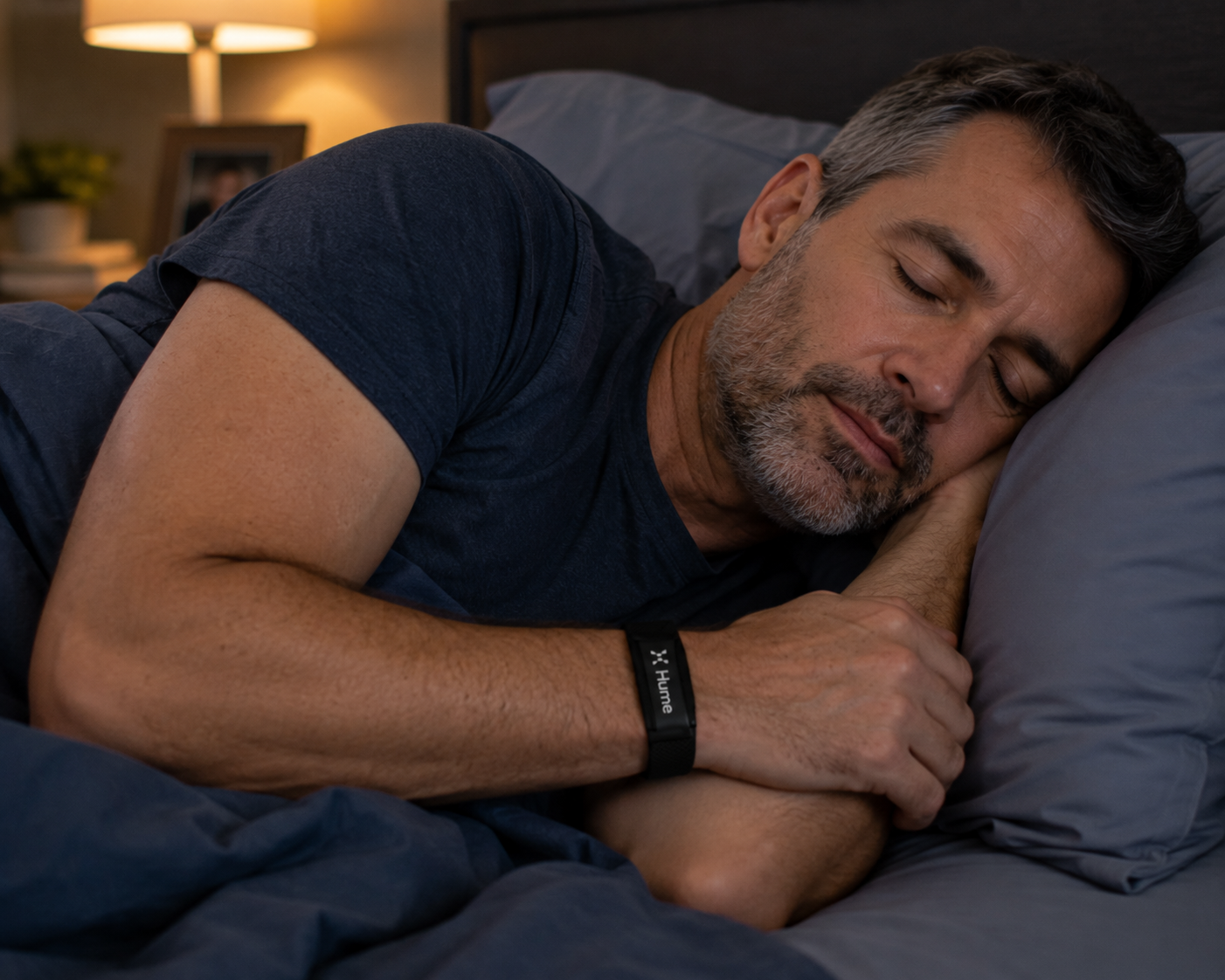
Sleep data is one of the strongest reasons to choose a screenless wearable. The Hume Band tracks sleep stages, sleep quality and recovery-related signals while you rest.
Its longer battery life may make continuous overnight wear easier than devices that require near-daily charging. As with all wrist-based consumer wearables, sleep-stage classification remains an estimate rather than a clinical sleep study.
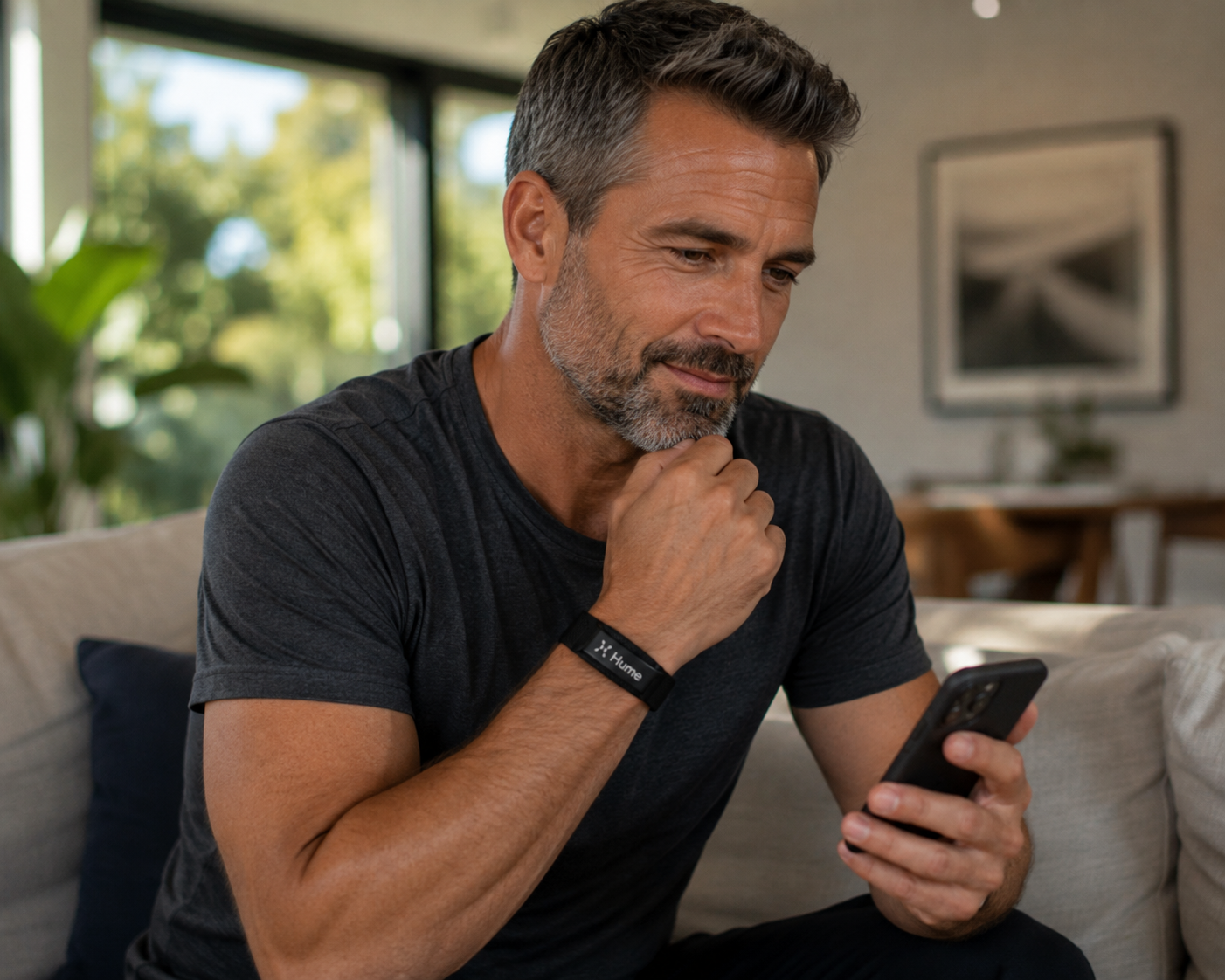
Hume’s main distinction is its focus on ongoing wellness and longevity-oriented patterns rather than messages, apps or a traditional smartwatch display.
That may appeal to users who want a quieter device that collects data in the background. It may be less suitable for anyone who wants maps, on-wrist notifications, music controls or detailed sport-specific metrics.
This category-level comparison avoids unsupported claims about specific rival models while helping clarify which type of device may suit different priorities.
| Wearable type | Main focus | Typical strengths | Typical trade-offs | Best fit |
|---|---|---|---|---|
| Hume Band 2.0 | Long-term wellness, sleep, recovery and metabolic trends | Screenless design, long battery, broad biomarker tracking, no mandatory subscription for core data | No smartwatch display; proprietary scores require careful interpretation | Users focused on continuous wellness awareness |
| Performance band | Training strain and athletic recovery | Detailed workout and recovery guidance | Often tied to a membership model and athlete-centered interface | Serious training and structured performance goals |
| Sleep-focused ring | Sleep and readiness | Discreet form factor and strong overnight emphasis | Ring sizing, comfort during lifting and possible subscription costs | Users whose main priority is sleep tracking |
| Full smartwatch | Apps, communication, GPS and general health | On-wrist display, notifications, navigation and broad app ecosystem | Shorter battery life and more distractions | Users wanting one multifunction wrist device |
The excerpts below are reproduced from user feedback displayed on the product website. Individual experiences vary, and testimonials should not be interpreted as typical or guaranteed results.
“As a doctor, I’m impressed. Most of my patients come in wanting a ‘magic pill’ for longevity, but the truth is, daily habits matter more than anything. That’s why I...”
“I can’t say enough good things about the Hume Band. One of the most impressive features for me has been the Metabolic Capacity. It flagged signs of strain on my...”
“I bought this on a whim—now I can’t imagine life without it. I wasn’t sure what to expect, but the Hume Band has become my daily health coach. It tracks things I...”
“I’ve tried every health tracker out there, and the Hume Band is in a league of its own. Most wearables just count steps or monitor heart rate, but the Hume Band...”
The Hume Band 2.0 has a clear identity: it is a screenless, long-battery wearable built around sleep, recovery, biomarker trends and long-term wellness awareness. Its strongest practical advantages are the broad set of tracked signals, continuous-wear design and access to core data without a mandatory subscription.
It is less compelling for buyers who need smartwatch functions, detailed navigation or clinical-grade measurements. The safest way to view the product is as a tool for noticing personal trends and building awareness—not as a device that diagnoses health conditions.
For users who understand that distinction and want a quieter alternative to a traditional smartwatch, the Hume Band 2.0 deserves serious consideration.
Check Current DetailsView current price, availability and product terms on the product website.